What is the sun like in the Maldives?
Imagine stepping off a plane at Malé Airport, and the first thing you’re greeted by is thick, warm air that seems to embrace you. The sun doesn’t just shine here; it reigns supreme. But before you rush off to make plans to lounge on the beach 24/7, let’s take a closer look at the Maldivian sun. It can be both a best friend and a wily enemy if you don’t understand its habits. Here, at the equator, things are different: the days are short but intense, and the UV radiation is so intense that even the locals prefer to hide in the shade of coconut palms at midday. And while you’re studying the ocean map, take a look at the sky—it’s no less vibrant here. For example, birds in the Maldives feel like they own the place: white terns might even land on the next sun lounger, watching you struggle with your sunscreen.
Features of the local luminary
The sun in the Maldives is unlike that experienced by residents of mid-latitudes. It’s practically at its zenith for most of the year, meaning its rays penetrate only a minimal layer of the atmosphere. The effect is the same as in the mountains: it burns imperceptibly but quickly. The UV index here often exceeds 8-9, with a maximum of 13. And these aren’t just numbers from a weather report—they represent a direct risk of first-degree sunburn in just half an hour of carefree lounging on the beach.

The heat is more bearable than in the continental tropics, thanks to the ocean breezes. The wind constantly stirs the air, creating the illusion of a comfortable coolness. This is the main pitfall: you don’t feel like you’re burning until it’s too late. Locals treat the sun with respect and rarely venture outdoors during peak hours unless absolutely necessary. They know that the equatorial sun doesn’t tolerate familiarity.
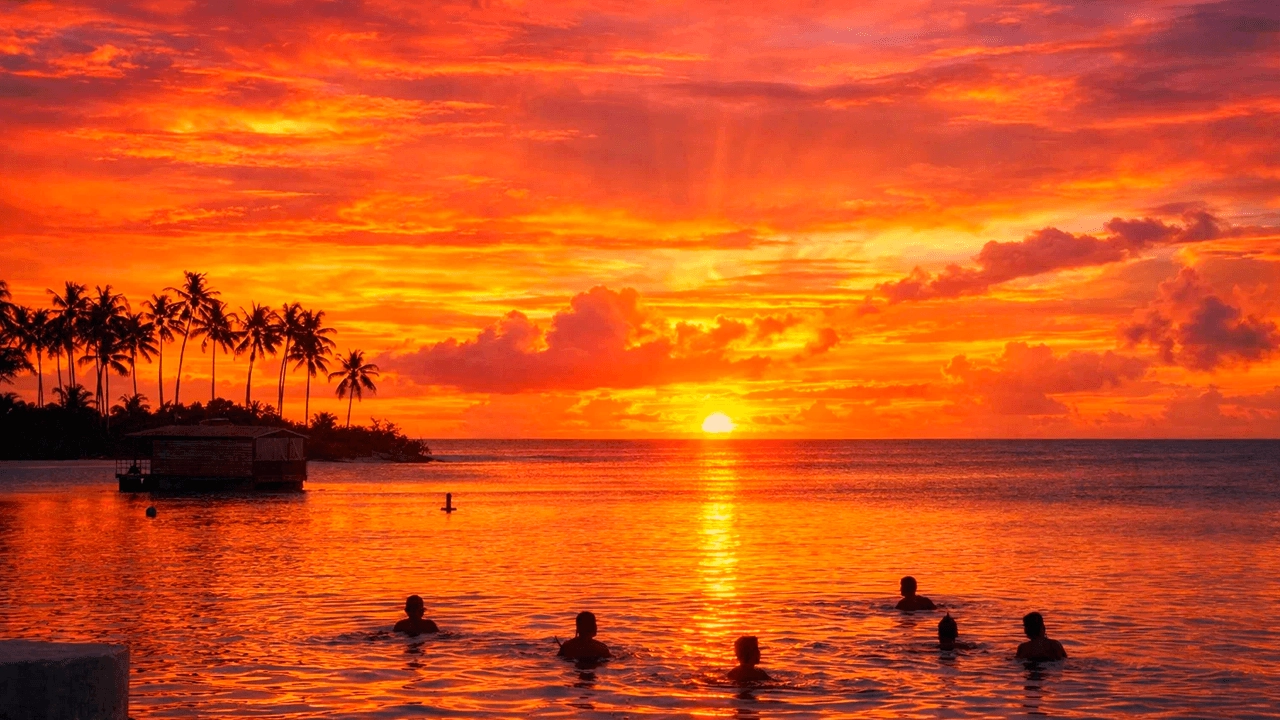
Another peculiarity is stability. The Maldives lacks the long twilights or lingering dawns we’re accustomed to. The sun rises quickly and decisively and sets just as swiftly below the horizon, painting the sky in every shade of orange and purple for just 20-30 minutes. It’s a show you can’t miss, but you shouldn’t delay watching it either—darkness falls instantly.
What time does he get up and leave?
This is probably one of the most stable parameters in the entire universe, and the Maldives are champions of consistency here. The sun here doesn’t spoil us with long June evenings, like in St. Petersburg, nor does it make us wait until nine in the morning for sunrise, like in Moscow in winter. The schedule is roughly the same year-round, with minimal fluctuations that only a professional astronomer would notice.

On average, sunrise occurs around 6:00 AM, and sunset occurs between 6:10 and 6:20 PM. This is the ideal time for early birds. If you want to catch the famous “golden hour” for photography, prepare your camera in advance. To fully enjoy the sunset, follow these simple rules:
- Arrive at your chosen spot at least 30-40 minutes before sunset to secure the best spot and experience the changing light.
- Don’t leave as soon as the sun disappears behind the horizon—the most vibrant colors often appear 10-15 minutes after sunset.
- Choose the west coast of your island or take a special cruise on a traditional dhoni—the views from the water are absolutely stellar.
Such short daylight hours (around 12 hours) create a unique rhythm of life. You wake up with the first rays of light, spend the time actively until lunch, wait out the peak heat in your room, and then head out for another evening stroll. The body quickly adapts to this natural alarm clock.
Sun by Season: When to Go
The myth that the Maldives enjoys 365 days of sunshine a year is shattered by the harsh reality of the monsoons. While temperatures remain comfortable at 28–32 degrees Celsius year-round, the number of hours of sunshine varies significantly. The archipelago is subject to two monsoons: the dry northeastern “iruvai” and the wet southwestern “hulhangu.”
The seasons here are clearly divided into two categories. The differences between them are significant and worth considering when planning your vacation:
- High season (dry season). Lasts from November to April. During this time, the sun shines brightly, the skies are clear, and any rain that occurs occurs during short, warm nights. This is the ideal time for a beach holiday and diving, when the ocean is calm and clear. The only downside is that prices during this period are more expensive than nurse sharks.
- Low season (wet). May through October. There’s still plenty of sunshine, but the sky is often overcast, with heavy, albeit short, showers and stronger winds. However, this is a paradise for surfers looking for big waves and budget travelers, as accommodation prices drop significantly.
The best time for those seeking a perfect tan and calm seas is, without a doubt, January, February, and March. Water temperatures reach 28–29 degrees Celsius, the air warms up to 30 degrees Celsius, and the ocean is like a mirror.
How not to burn in heaven
The worst thing that can happen in the Maldives is spending half your vacation in your room with blistering skin, cursing your own carelessness. News of Russian tourists suffering massive burns from extreme UV rays isn’t a horror story, but reality. The body, exhausted by winter, craves the sun and forgets about caution. Doctors at resorts are tired of repeating basic rules, but tourists continue to make the same mistakes.

Peak solar activity occurs between 11 a.m. and 3 p.m. During this time, there’s no point in going to the beach unless you want to turn into a boiled lobster. Even under an umbrella, diffuse radiation is strong enough to cause an unpleasant surprise. Another important point: water doesn’t protect you; on the contrary, it intensifies the impact by reflecting the rays.
If you want to go home with an even tan, not a diagnosis, here’s a quick list of what should be in your beach bag first:
- Sunscreen with at least SPF 50, reapplying after every swim.
- Cover-ups or a light cover-up for walks during dangerous hours.
- Sunglasses with a good UV filter—your corneas are also at risk here.
And remember: cloud cover in the Maldives is no excuse to relax. Ultraviolet rays easily penetrate the light haze, and you can get sunburned even on a cloudy day. Respect the local sun, and it will reward you with an even, chocolate-colored complexion and vibrant photos to remember your day with.