What is Green Tax in the Maldives?
To understand the green tax in the Maldives, it’s important to understand: it’s a mandatory environmental fee levied on every foreign tourist for each night they stay at any accommodation—from a luxury resort to a modest guesthouse on an inhabited island. The tax is established at the state level, and its payment is not a recommendation or a “voluntary donation,” but a requirement of Maldivian law. Incidentally, whether shells can be exported from the Maldives is another frequently asked question related to the archipelago’s environmental regulations, but it’s only tangentially related to the tax: both mechanisms are aimed at preserving the islands’ fragile environment.
Definition and purpose of the fee
The Green Tax (more commonly referred to as the “green tax” in Russian-language sources) was introduced in the Maldives in October 2016. Initially, the rates were symbolic, but they doubled in 2025, making it a significant component of a traveler’s budget. Funds collected through this tax are accumulated in a special Green Fund and are used exclusively for environmental initiatives.
How does the Green Fund work?
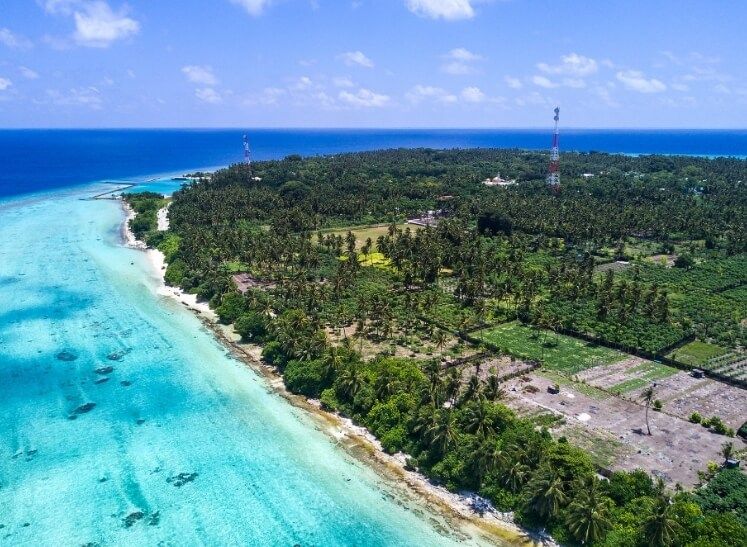
Funds from the Green Fund are used to restore coral reefs, protect coastlines from erosion, develop water supply and sewerage systems on the islands, and fund environmental cleanup and waste management programs. The Maldives is one of the most vulnerable countries in the world to climate change: most of the territory lies just one or two meters above sea level. Therefore, preserving ecosystems here is not just an environmental issue, but literally a matter of survival. The Green Tax is one of the instruments the state uses to finance adaptation and protection measures.
Green tax rates in 2025 and 2026
The most important question for tourists is how much they’ll have to pay. As of January 1, 2025, updated rates will be in effect in the Maldives, and they depend solely on the type of accommodation. No other criteria (room category, season, or length of stay) are used for calculation.
Green tax payment procedure
It all depends on the booking method. There’s no set rule—in some cases, the tax is included in the price, while in others, it must be paid separately on site. Therefore, it’s important to understand the mechanism in advance to avoid any unpleasant surprises at reception.
Payment upon purchase of a tour
When purchasing a package tour through a tour operator, the green tax is often already included in the total price. Tour operators typically calculate all mandatory fees in advance and include them in the price. However, this isn’t always the case, especially with dynamic packages, late bookings, or special promotions. Before paying for a tour, it’s always worth checking the contract and confirming with the manager whether the green tax is included in the final price. Some operators list this fee as a separate line item on the invoice, and in these cases, it must be paid before the trip.
Payment for self-booking
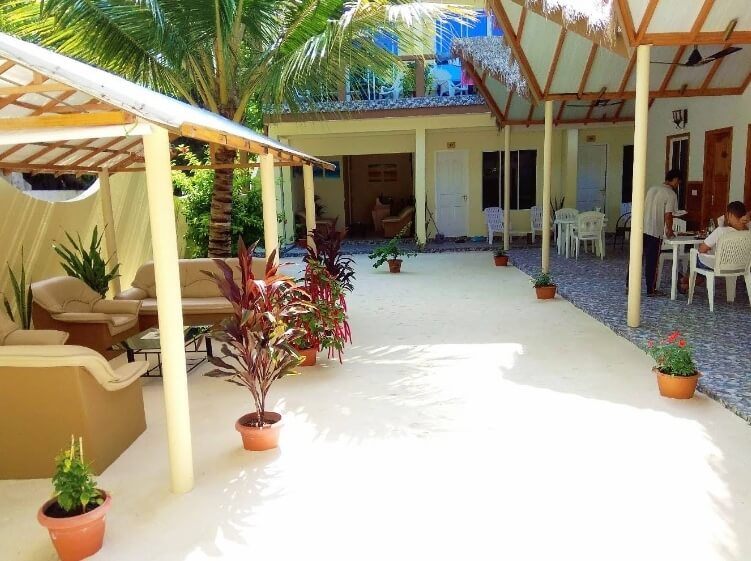
When booking independently through aggregators, the situation is different. Green tax is often not included in the room price displayed on the website. Instead, it is paid separately—at the hotel reception upon check-in or upon check-out. Sometimes the hotel may bill you in advance, but you should expect to pay it on site. The currency used for payment is strictly US dollars. Some hotels may accept payment in Maldivian rufiyaa at the internal exchange rate, but it’s easier and more secure to have cash in dollars or a card that accepts USD.
What else do you need to know about payment?
- The tax amount is fixed per person per night and does not depend on meal plan or room type.
- The hotel is required to issue a receipt for the green tax payment – keep it in case of dispute.
- If you change hotels during the same trip, the tax is charged separately at each hotel for the nights spent.
The total cost can be substantial. For example, for a couple staying at a resort for 7 nights, the green tax would be: $12 x 2 people x 7 nights = $168 for this fee alone. This is in addition to the TGST and service charge, which are discussed below.
Additional taxes and fees in the Maldives
The green tax isn’t the only tax a tourist will face. It’s important to understand the big picture to avoid any unpleasant surprises when it comes to your travel budget. All mandatory payments can be divided into three groups.
TGST – tourist services tax
TGST (Tourism Goods and Services Tax) is a tax on tourism goods and services. Effective July 1, 2025, its rate was increased from 16% to 17%. This tax is levied on the cost of accommodations, meals, excursions, spa services, and virtually everything you book at a resort. Unlike the green tax, TGST is a percentage of the cost of the service, not a fixed amount per night.
Service fee and its amount
The Service Charge is a mandatory 10% fee charged on the same items as the TGST. This fee is distributed among hotel staff, but is not a tip—it’s a fixed amount and mandatory. It’s added to every bill at a restaurant, bar, or on an excursion.
Total tax burden
Ultimately, at most resorts, you need to mentally add 27% (17% TGST + 10% service charge) to any listed price, followed by a fixed green tax per guest per night. In practice, this works out like this: a $300 room per night for two guests turns into approximately $405 after adding all three components. The difference is significant, and many tourists unfamiliar with the local system are unpleasantly surprised by the final bill.

What are the funds from the green tax used for?
The Maldivian government reports on its Green Fund spending quite transparently. The funds collected are allocated to specific projects, not simply “pooled.” The main expenditure areas can be listed.
- Coastal protection – beach strengthening, soil erosion control, construction of protective structures.
- The development of water supply and sanitation systems on the islands is a critical aspect for preserving the environment in conditions of limited freshwater resources.
- Coral reef restoration – programs to breed corals and restore damaged areas of reefs.
- Environmental cleanup programs – garbage collection, waste recycling, combating plastic pollution.
Results and statistics of the training camp
In 2024, according to the Ministry of Finance, over $103 million was collected into the Green Fund. In 2025, thanks to higher rates and increased tourist traffic, revenues increased significantly – in the first five months of 2026 alone, over 1.05 billion Maldivian rufiyaa (approximately $68 million) was collected. President Mu’izzu also approved an annual allocation of 7 million Maldivian rufiyaa from the Green Fund to strengthen environmental protection measures. This demonstrates that the tax is truly effective and the funds are reaching their intended recipients rather than languishing in budget coffers.
Remember: the green tax isn’t a hidden levy, but your direct contribution to preserving the very beauty of the Maldives you came here to see. Coral reefs, white beaches, and turquoise water require care, and this care is paid for by those who enjoy them. Include the green tax in your budget as an unavoidable but justifiable expense, and your vacation in the Maldives will only bring positive emotions.