What grows in the Maldives?
To understand what grows in the Maldives, you need to cast aside the stereotype of lifeless sandy atolls: the archipelago’s flora comprises over 600 species, including coconut palms, poisonous barringtonias, and fragrant night-blooming jasmines. About a hundred species are native to the islands, while the rest were introduced by humans and have thrived in the tropical climate. And if you’re lucky enough to see the shore of Vaadhoo Island suddenly illuminated with a bright blue light, you’ll know it’s the Maldives’ luminescent plankton, a marine wonder unrelated to land plants, yet which adds a truly magical touch to the local natural environment.
Coconut palm and other palm species
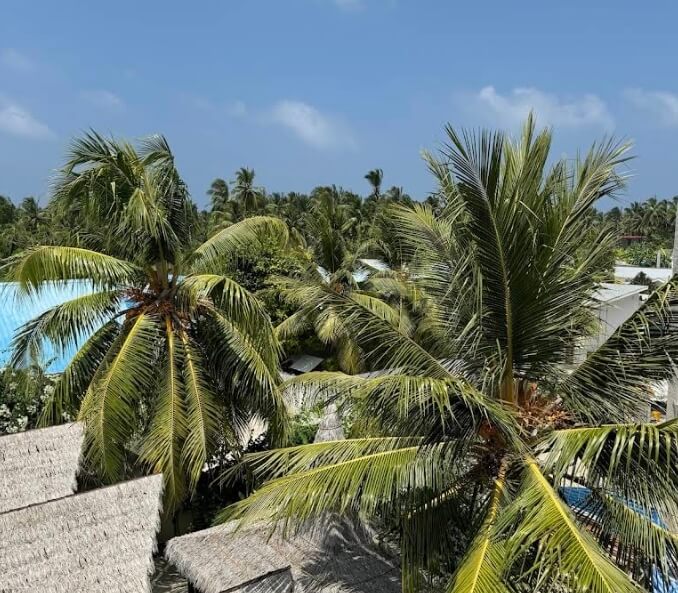
The Maldives’ most iconic plant is, without a doubt, the coconut palm (Cocos nucifera). It grows on virtually every island, and locals have used it for centuries as a source of food, water, oil, fiber, timber, and medicine. The palm can live up to 100 years and yield 50 to 80 nuts per year, while its fruit can travel vast distances across the ocean and germinate even after prolonged exposure to salt water. The coconut palm is not just the most common tree, but a true symbol and national treasure of the Republic of Maldives.
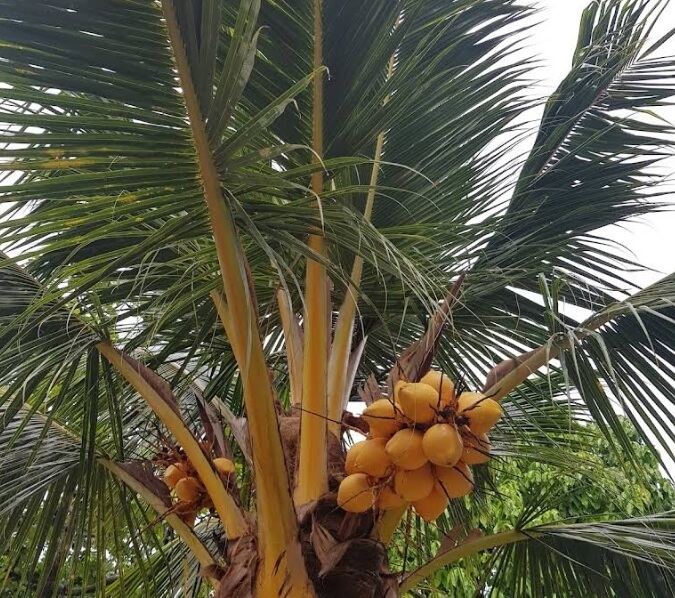
Besides the coconut palm, other palm species can be found in the Maldives. The screw palm is distinguished by its stilted roots and edible fruits the size of a child’s head, which resemble pineapples but are actually vegetables. The betel palm also grows here, the nuts of which are used to extract a tonic mixture essential to everyday Maldivian culture. These palms are less common and are mainly found on inhabited islands, where they are cultivated specifically for this purpose.
The main types of palm trees in the Maldives
- Coconut palm – produces nuts, oil, fiber, wood, roofing sheets, lives up to 100 years.
- Screw palm – the fruits are used as a vegetable, the roots strengthen the soil on slopes.
- Betel palm nuts are used as a chewable tonic in local culture.
Each palm species plays a specific role in the ecosystem and economy. The coconut palm provides residents with almost everything they need, the screw palm helps combat soil erosion, and the betel nut palm supports cultural traditions. Without these plants, life on the atolls would be completely different.
Fruit trees and crops
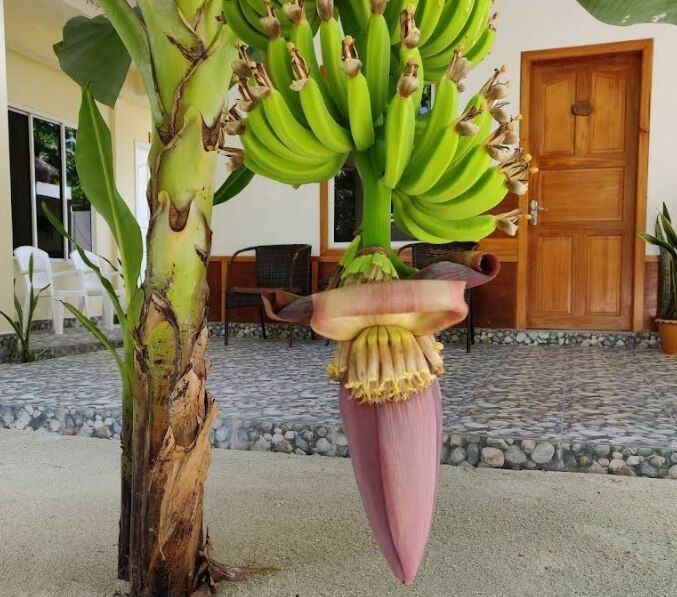
Bananas, papayas, and breadfruit trees with their knobby fruits can be found on every inhabited island. Bananas grow everywhere here, but they are smaller and more flavorful than those sold in European supermarkets. Papaya is a tall tree with large yellow-orange fruits, which locals eat for breakfast with lime juice. Breadfruit trees produce fleshy fruits that are baked, boiled, or fried—they taste like potatoes or fresh bread.
Mango trees, however, are a rarity and can be seen almost exclusively on the capital island of Male. In the northern and southern atolls, where the soil is more fertile, sweet potatoes, cassava, taro, millet, and corn are grown. These crops are less visible to tourists, but they form a staple of the local diet. In the botanical gardens of resorts, such as on the green island of Kuramathi, you can see mini bananas, sweet potatoes, Indian figs, bamboo, and tropical grapes.
The most common fruits and vegetables
- Bananas (local small varieties), papaya, breadfruit, mango (rarely).
- Sweet potato, cassava, taro, yam, corn, millet.
- The resort gardens contain tropical grapes, Indian fig trees, and bamboo.
Some resorts use hydroponic greenhouses to grow herbs for local restaurants, including basil, dill, sage, mint, arugula, lemongrass, and cilantro. This allows them to provide guests with fresh herbs without having to import them from abroad. This practice is becoming increasingly popular within the context of sustainable tourism.
Flowers and ornamental shrubs
The Maldives’ blooming flora is a riot of color and fragrance, largely thanks to introduced species. Plumeria (frangipani), with its delicate snow-white or pink flowers, is ubiquitous. Its rich citrus scent is particularly intense at dusk and before dawn, and it is these flowers that are most often woven into traditional Maldivian garlands. Locals believe the scent of plumeria attracts good spirits.
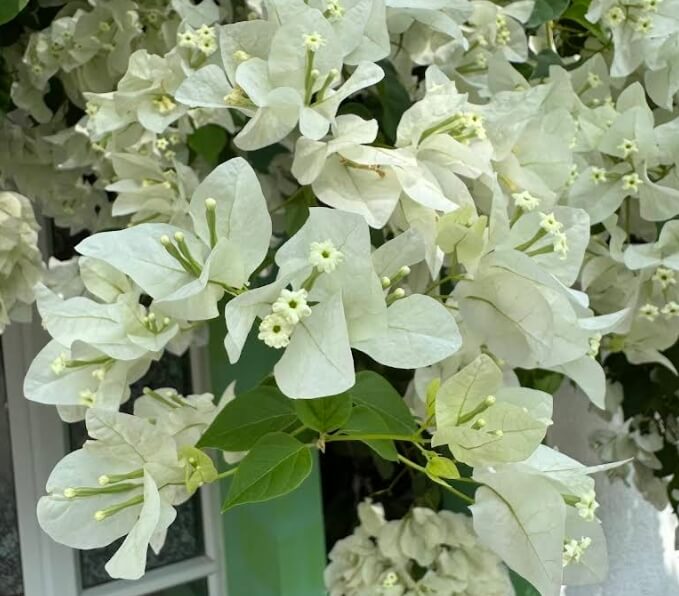
Hibiscus, or China rose, is another frequent guest in hotel gardens; its large, vibrant blooms can be seen at every turn. Hibiscus flowers come in red, pink, yellow, and orange, and they often adorn the hairstyles of local women. And bougainvillea, which from a distance appears to be a tree covered in scarlet petals, is actually a shrub, its bright leaves concealing small white flowers. Bougainvillea is so undemanding that it grows even in poor, sandy soil.
Nocturnal and poisonous plants
Two contrasting plants deserve special attention. The Guettarda magnifica, often called night jasmine, is a shrub with small white buds that open at night, filling the air with a rich jasmine scent. This aroma is so strong that it can cause headaches in sensitive individuals, so the shrubs are usually planted away from dormitories. The Barringtonia, however, a tree with lush, globe-shaped flowers, poses a danger: all its parts contain toxic substances that can irritate the skin of sensitive individuals.
Barringtonia trees often grow along the coastline, and their flowers fall into the water, attracting fish. Locals are aware of this tree’s poisonous properties and avoid it. Tourists should remember that not all beautiful flowers are safe to touch, and they should avoid picking unfamiliar plants without permission.
Mangrove forests and coastal vegetation
Mangrove forests spread across the marshy soils along the coastline. Fourteen species of mangrove trees have been recorded here, found on 108 islands, primarily in the northern atolls. Mangroves act as natural filters, purifying the water and protecting the shore from storms. Their roots create complex underwater labyrinths where fish fry and small crustaceans hide.
Mangrove wood is used in construction and charcoal production, and tannins are extracted from the bark. Locals value mangroves not only for their practical benefits but also for their role as a natural barrier against tsunamis. Scaevola, the Indian almond tree, as well as heliotrope and beach cabbage, also grow in the coastal zone, forming impenetrable thickets. These plants are particularly important for fixing sand and preventing it from washing into the ocean.
Scaevola is a shrub with unusual fan-shaped flowers found on many beaches. The Indian almond tree produces edible nuts used by locals in cooking. And beach cabbage is a plant with fleshy leaves that can be found literally at the water’s edge. Together, these species form a dense coastal belt that protects the islands from erosion.
The Maldives’ flora is a stunning symbiosis of hardy natives and imported exotics, creating the archipelago’s unique character. It boasts everything from majestic coconut palms and fruit trees to dangerous barringtonias and fragrant night-blooming jasmines. Mangrove forests protect the shores, while bougainvillea and hibiscus delight the eye year-round.
The best way to explore flora is at leafy resorts like Kuramathi, where botanical trails are laid out, or on inhabited islands, where you can see bananas and papayas growing in their natural habitat. And if you want to add a touch of magic to your botanical tour, wait for a dark, moonless night, step ashore, and watch the water glow. Glowing plankton is a natural wonder unto itself, and like most island plants, it will stay with you for a long time. Just remember that behind this beauty lies a fragile ecosystem that must be protected.