What grows in the Maldives: palms, fruit, flowers and mangroves
The Maldives are coral atolls with thin, sandy soil, so the vegetation is more modest than on the mainland and more varied than it first looks: from coconut palms and mangroves to the papaya and watermelon farms on our island of Thoddoo.
The islands’ plants at a glance
| Plant | Where you see it | Why it matters |
|---|---|---|
| Coconut palm | almost every island | food, drink, oil, fibre and timber |
| Screw pine (pandanus) | coasts and islands | its leaves flavour Maldivian curries |
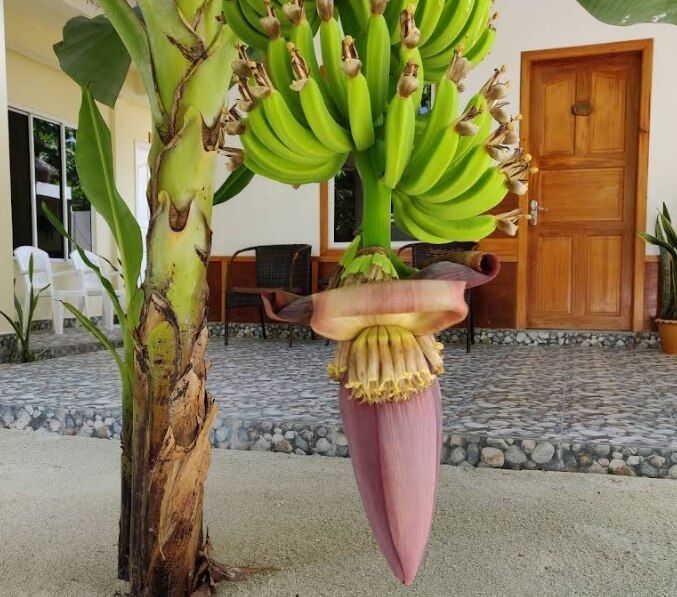
| Banana, papaya, breadfruit | inhabited islands | everyday local fruit |
| Bougainvillea, hibiscus, frangipani | guesthouse and hotel gardens | bright flowers all year round |
| Mangroves | marshy shores and lagoons | shelter for young fish, protect the shore |
| Scaevola, tree heliotrope, beach gardenia | coastal scrub | hold the sand in place |
Coconut palm and screw pine
The coconut palm (Cocos nucifera) is the main tree of the atolls and grows on almost every island. Islanders have long used it for food and drink, and for oil, fibre and timber. Its nuts float, so they can drift across the sea and sprout on a new shore.
Next to it grows the screw pine, or pandanus, a tree on stilt-like roots. In Maldivian cooking the leaves of one species, Pandanus amaryllifolius, are used to flavour curries.
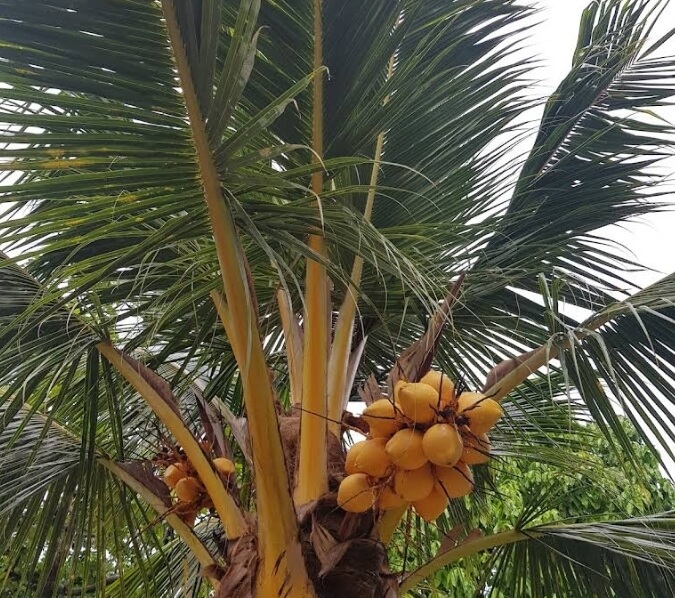
Fruit trees and crops
Bananas, papayas and breadfruit grow on the inhabited islands. Breadfruit is baked, boiled or fried and tastes somewhere between potato and bread.
Root crops such as taro, cassava and sweet potato are grown where the soil allows. Mangoes are not native to the islands and are often brought in from Sri Lanka and India.
Because the soil is thin and sandy, most food plants grow in gardens and on farms rather than in the wild.

Thoddoo: the farm island
Thoddoo is known for farming. It is described as the largest watermelon producer in the Maldives, and much of the harvest is timed for Ramadan, when demand in Malé is high. Local news reports also mention papaya, cucumbers, scotch bonnet chillies and betel leaf grown on the island.
You see the plantations on foot or by bicycle, and bicycles are available for rent at the guesthouse. The farms are private, so ask before you go in and do not pick anything. What is ripe depends on the year and the weather; ask us what is in season on your dates.

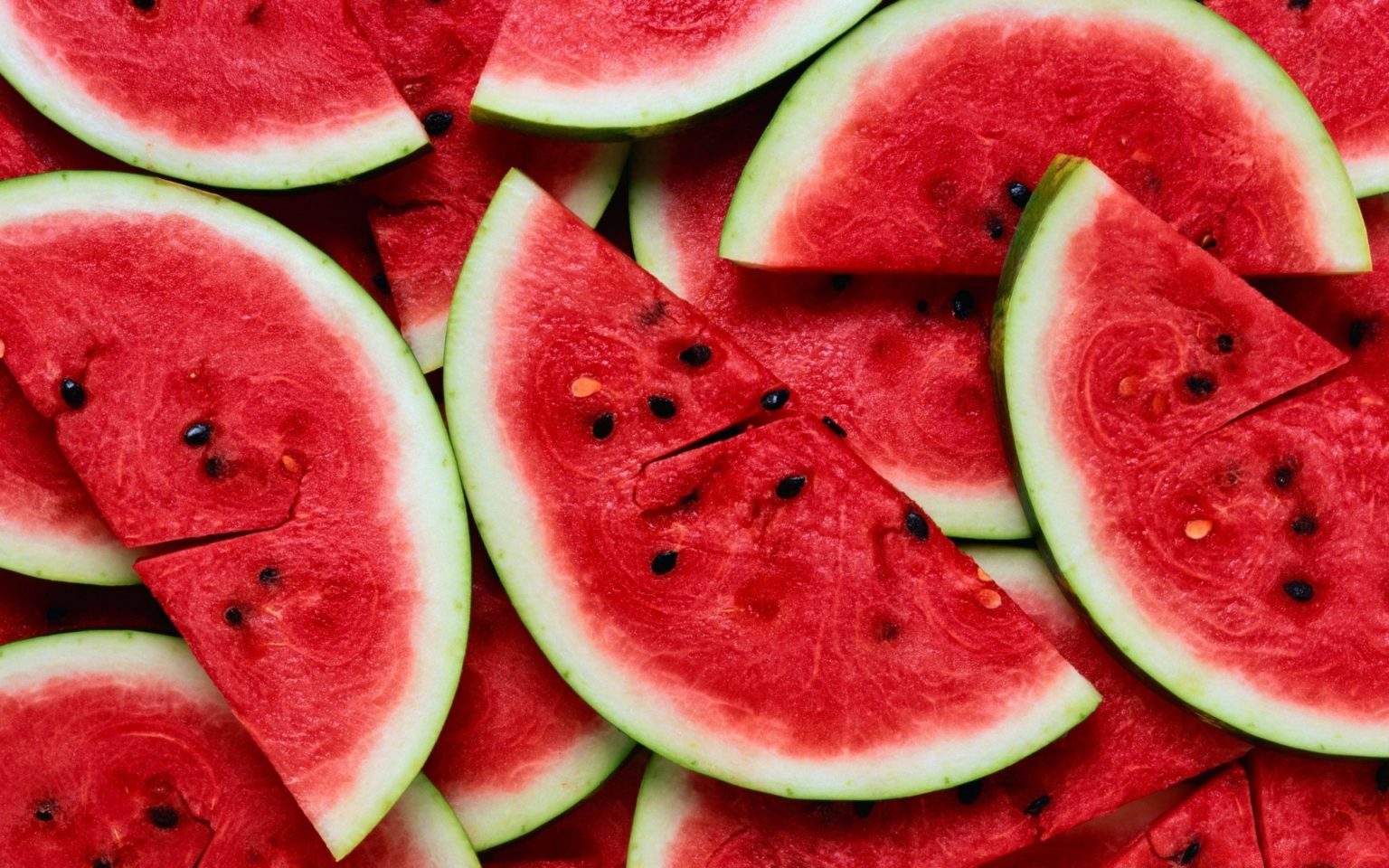
About Thoddoo · Getting around the island
Flowers and shrubs
Most of the colour in the gardens comes from introduced plants. Bougainvillea looks like a tree in scarlet petals from a distance, but it is a shrub whose bright leaves hide small white flowers. It is so undemanding that it grows even in poor sandy soil.
Hibiscus and frangipani (plumeria) are also common in guesthouse and hotel gardens.
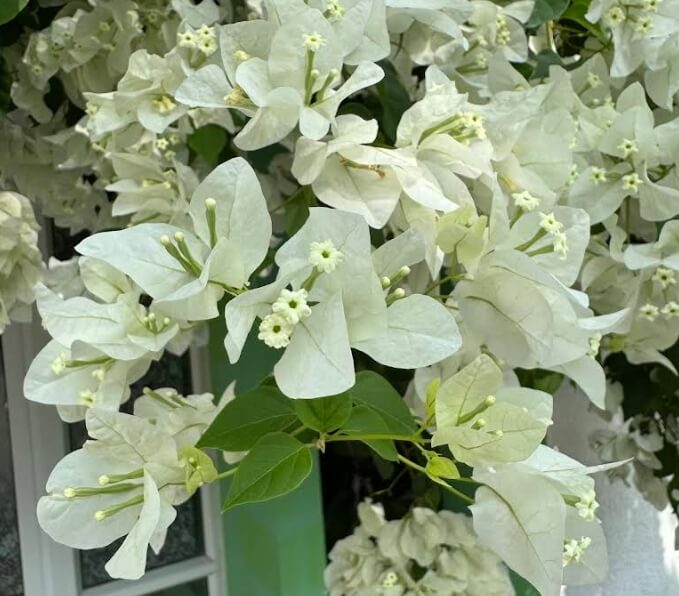
Mangroves and coastal scrub
Mangroves grow on marshy shores and lagoons. Counts differ: a 1990s FAO report lists at least 13 species, and later official counts give 15, including associate species. Mangrove roots shelter young fish and small crustaceans, and the trees help protect the shore.
Behind the beach, coastal scrub of scaevola (sea lettuce), tree heliotrope, beach gardenia and screw pine holds the sand in place.
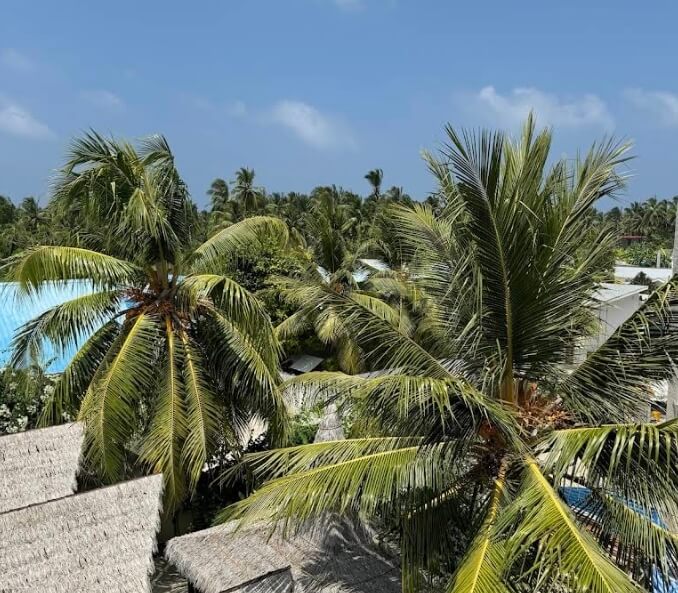
Where to see the plants
On a local island such as Thoddoo, on a walk or a bicycle ride past the farms, and in the gardens of guesthouses and hotels.
After dark you may also see the glow of the sea: read about the luminescent plankton of the Maldives, a marine wonder unrelated to land plants.
A note of caution: Some coastal plants are poisonous, for example the barringtonia tree. Do not taste unfamiliar fruits or seeds, and do not pick plants you do not know.
Frequently asked questions
What is the most common tree in the Maldives?
The coconut palm. It grows on almost every island and gives food, drink, oil, fibre and timber.
Are there mangroves in the Maldives?
Yes. Counts differ: at least 13 species in an older FAO report and 15 in later official counts.
What does Thoddoo grow?
The island is known for watermelons. Local news reports also mention papaya, cucumbers, chillies and betel leaf.
Can I walk through the farms on Thoddoo?
The farms are private, so ask before you enter and do not pick fruit.
Are there poisonous plants?
Yes, some coastal plants, such as the barringtonia tree, are poisonous. Do not taste unfamiliar fruits or seeds.
Reviewed by the Relax Residence team in October 2026.